
Jun 4, 2022 Boulezsaal Berlin
Heath Quartet with Jőrg Widmann (clarinet)
Purcell/Britten: Fantazias
Britten: String Quartet No.3
Widmann: Clarinet Quintet (2017)
(scroll down for English review)
身兼單簧管獨奏家的德國作曲家韋特曼,他經常和弦樂四重奏合演莫扎特及布拉姆斯的單簧管五重奏,他幾年前就和哈根四重奏在香港演奏過前者,但我當時沒去看。
韋特曼為不少樂器作了協奏曲或獨奏作品,但單簧管五重奏這個曲式,他感到特別大的壓力,創作上走在前衛的他,在這個曲式卻是因為有莫扎特及布拉姆斯的珠玉在前。但他在2017年,他44歲的時候終於寫了出來,由哈根四重奏和他一起首演,也和其他弦樂四重奏演奏過,就是未有錄音面世,是我來聽這場一大原因。見到出版社網頁的描述:這是一首長四十分鐘的慢板,又有點擔心。
我不是很熟韋特曼的創作,又未至於完全陌生(例如在慕尼黑看過他的歌劇《巴比倫》),仍為樂曲的風格感到意外。知道他在此作引用了布拉姆斯的一個五度動機,就是兩個音而已,但想不到韋特曼就是以晚年布拉姆斯那種憂鬱風格繼續寫下去,單簧管的部分聽來很簡單,但要韋特曼的超凡技巧才能維持這種緩慢弱音。
其實音樂並非真的是「一個」慢板,可能是有六或七個段落,現場看,見到韋特曼將兩或三頁的單簧管分譜貼在一張硬紙板,吹完這塊就放地下,聽來又真的是一塊紙板等於一段。緩慢輕柔中仍有甚多變化,那就是弦樂四重奏的任務了,讓單簧管維持着言簡言駭,但把簡單音符下所暗示的情感擴張。間中有一些特別演奏技巧,弦樂及單簧管都有,後者在第三段有頗長的雙音段落,輕逸神秘,甚有glass harmonica的味道,算得上是跟莫扎特的一個連繫。憂鬱、晚期、秋意不只是布拉姆斯,我也聽到一些晚期理察史特勞斯的境界。不同段落往往推到點到即止的高潮,再從平靜來過,但沒有重覆的感覺。
這是一首完全不害怕會被前衛樂迷指責崇古,或者一般觀眾批評曲高和寡的作品,雖說是「一個」慢板,但感情幅度異常廣闊,不只是表現出單簧管的表達力,也是為單簧管五重奏這個因為莫扎特及布拉姆斯成為了深邃象徵的曲式,做到精湛延續。很難在家靜心欣賞的作品,不過在過千人的音樂廳就很難聽到當中的弱音及極弱音了。
(上半場希夫四重奏演奏的布烈頓《第三弦樂四重奏》本也令我非常欣賞,但被韋特曼《單簧管五重奏》超越了,不過也值得略談。它是布烈頓最後一首大型作品,五個樂章總長廿幾分鐘,第二及四樂章是短促的諧謔曲,一、三、五是慢板。本也像蕭斯達高維契後期的弦樂四重奏有死亡陰影,但布烈頓絕不沉溺,第一小提琴在第三、五樂章都牽動出強烈情緒,然而是希望、平和多過虛無。如果多一點有名的四重奏選奏,定能奠定它應得的地位。)
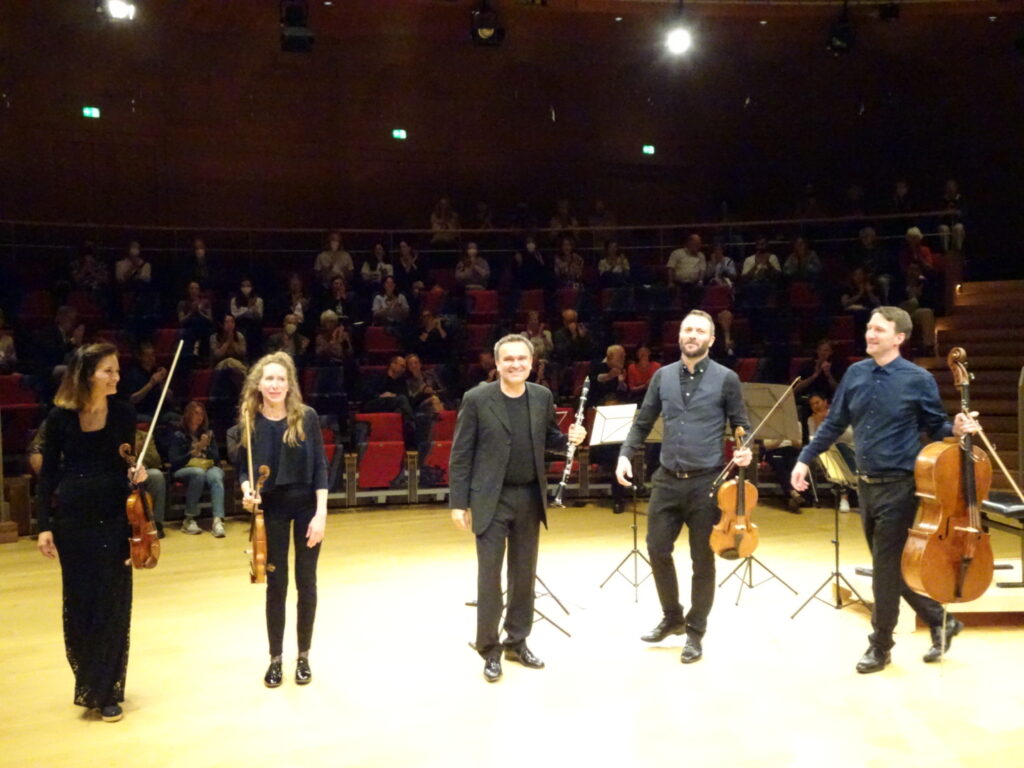
As a top solo clarinetist Jőrg Widmann often joins string quartets in Mozart’s and Brahms’ Clarinet Quintet. Yet Widmann had to labour very hard before he could finally come up with his own. He and Hagen Quartett premiered it in 2017, Widmann also played it with some other quartets but no commercial recordings have been made.
The work was described as one 40-minute adagio. I was worried it’d either a pointillist or a static piece but this work was definitely neither. Widmann not only quoted a falling fifth motif from Brahms he also continued on his autumnal mood. The clarinet notes are deceptively simple but lesser players might easily expose their weaknesses. There are six or seven sections which cover a wide range of emotions and clarinet timbres. One exceptional highlight is the third section when the clarinet plays in multiphonics, evoking a glass harmonica-like eerie sound that is so hauntingly beautiful, also another nod to Mozart.
Widmann usually builds up each section to a loud or disturbing climax but he’d never linger on them and the music would always turn into another shade of soulfulness. I could never imagine myself feeling shattered after hearing a piece written within a decade. At times I thought Widmann doesn’t just incorporate all the timbres or playing technique of the clarinet, he conjures the universe as well. A truly worthy successor to the Mozart and Brahms clarinet quintets.
Heath Quartet’s performance of Britten’s Third Quartet was also enjoyable, but entirely upstaged by the Widmann’s Clarinet Quintet. Still, I felt the Britten work, his last completed major work, deserved to be played more. Britten knew he didn’t have much time but he wasn’t as obsessed or long-winded as Shostakovich in his late quartets. Three adagios make up the bulk of the work, with two scherzo interludes. But the adagios have such optimism that hope seems to be at the end of the tunnel.