
Jun 5, 2022 Philharmonie Berlin
Andris Nelsons / Vienna Philharmonic
Gubaidulina: Fairy Tale Poem
Shostakovich: Symphony No.9
Dvorak: Symphony No.6
Encore – J.Strauss: Where the Lemons Bloom Waltz
(scroll down for English review)
尼遜斯和維也納愛樂八個城市的歐洲巡迴,來到第三站柏林愛樂廳。開場曲是尼遜斯早前推出了一張專輯的古拜杜麗娜,這是她1970年代作品《童話詩》,將稍為前衛的曲風寄托在幻想世界,十來分鐘的樂曲,用來拍一部動畫也可以。
記得十幾年前維也納愛樂由格杰夫帶領來香港時,也奏過蕭斯塔高維契《第九交響曲》。聽尼遜斯和波士頓交響的同曲錄音時察覺不到,現在現場聽,覺得他用力營造要不尖酸喧鬧(快板)、要不虛無呆滯(慢板)的詮釋,一點也不莫扎特風,更徹底打破史太林想聽「勝利交響曲」的希望。難得是維也納愛樂、尤其是弦樂願意配合這偏鋒的詮釋,終曲我認為比《第五交響曲》終曲,更能表達出「你們要慶祝!你們要慶祝!」的荒謬。
下半場德伏扎克《第六交響曲》較少在現場聽到,但也記得2013年前捷克愛樂及當時還在世的貝洛勒維克在香港奏過。尼遜斯在此曲及之前的蕭氏,都用上六十人弦樂(其實大提琴少了一人),可以說他不顧慮弦樂會太厚。於是也和之前聽他的埋察史特勞斯錄音般,聲音厚就拖慢。結果沒有奏第一樂章的提示部重覆下,全曲也用了48分鐘,很多指揮奏了提示部重覆都不用這個時間。不過從聲響而言,維也納愛樂繼續用上頗厚及響的聲音,儘管尼遜斯把樂曲奏到一身肥膏,能聽維也納愛樂這麼猛烈爆炸的音色,也算是難得。
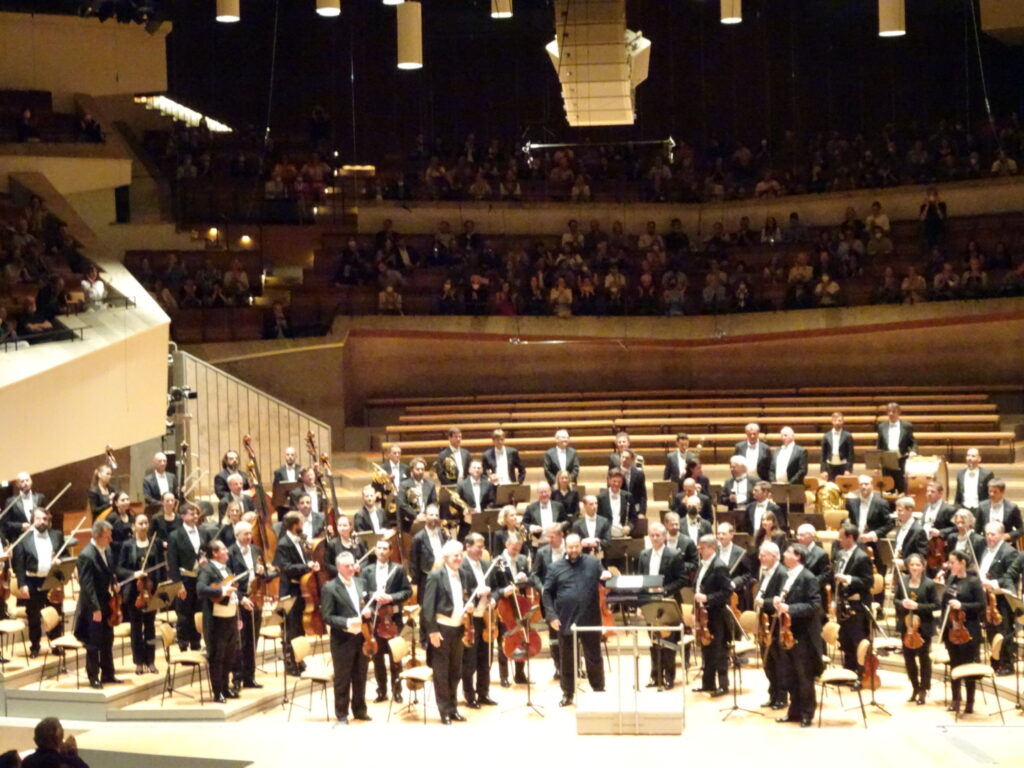
Andris Nelsons takes the Vienna Philharmonic on an eight-city tour this June, the third stop was Berlin. The opener was Gubaidulina’s Fairy Tale Poem, a 1970s work that had been quite obscure but increasingly heard on concert halls these days. Gubaidulina’s slightly avant-garde sound world finds refuge in the mystic fairy tale world, and this piece could have been the soundtrack of an animation short.
In Shostakovich’s Ninth Symphony, I think Nelsons sought to break the cliché that this is a Mozartian work. In my view, Nelsons’ first movement was anything but cheerful, the sound was rather frightful and thorny. In the slower movements the mood was rather dull or hopeless, as in late Shostakovich. In the finale Nelsons deliberately let loose the orchestra’s balance and allow the sound descend into cacophony. In my mind, Nelsons’ approach seemed to illustrate the brainless celebration of the finale of the Fifth.
In this and Dvorak’s Sixth Symphony, Nelsons used the Vienna strings at their maximum 60-strong manpower (actually they’re one cello short). Nelsons seemed to be oblivious that the string sound might get too thick. As a result I find this Dvorak symphony more sluggish than it already is. Nelsons didn’t take the first movement exposition repeat, yet the total playing time of 48 minutes was even longer than conductors who do take that repeat. Although I didn’t enjoy the interpretation, I still savoured the over-the-top sound mass that the Viennese conjured for their beloved guest conductor.