
Jun 27, 2022 7:30pm Staatsoper Berlin
Christian Thielemann (for Herbert Blomstedt) / Staatskapelle Berlin
Wagner: Tristan und Isolde: Prelude and Liebestod
Bruckner: Symphony No.7
(scroll down for English review)
本來是2020年6月的演出,因為疫情延至21年,再因為疫情延至今年,布倫斯泰特已開始和樂隊排練,但在周六下午跌倒,留院觀察,周日樂團宣佈由蒂利文代替。我其實是想聽布倫斯泰特多一點,看過他布魯克納三(柏林愛樂)、五(萊比鍚、香港藝術節)、六(馬勒青年)、九(NHK),想至少收集多一首七。不過蒂利文的布魯克納,我也只是看過四、五、八、九、《第三彌撒曲》,又是未有七,所以欣然接受,但仍希望95歲的老指揮可以康復。開場前巡例有人上台公佈轉指揮,如果我沒聽錯的話,這晚是蒂利文第一次指揮這樂團。
上半場本來是莫扎特《第34交響曲》,但蒂利文改成自己及這隊樂隊都很拿手的華格納《崔斯坦》的前奏曲及愛之死。三年前我在同一地方聽過巴倫邦指揮全劇,其實蒂利文的我也聽過,不過在拜萊特。但這次是音樂會就更易看到蒂利文的企圖。我只好說兩個指揮的哲學不同,巴倫邦是「你們即管奏,我會控制」,蒂利文則需要樂手跟隨,不過會給他們充裕的空間及時間,不像K佩特連高將韁繩勒得太緊。蒂利文把前奏曲的6/8拍子的六拍很清楚打出,卻會有不少搶板,快慢都有。再歸納的話,我會說蒂利文是濃烈,巴倫邦是控制到的醉。
這還是我聽慣的蒂利文,聽了他超過三十場的蒂利文。原來我疫情前最後一次現場布魯克納,就是他和維也納愛樂的第八,在維也納音樂廳(Konzerthaus)。這個第七想不到會有新天地,他以頗快的兩拍開始第一樂章,但一點都不趕,反而比太慢、拆開成四拍的奏法遠遠溫柔得多,就像搖籃曲。不知不覺間,他的速度隨着音樂的起伏轉變,但和先前的華格納不同,他把「節奏」的棚架成功隱藏了,只剩一句句的歌聲。聽過蒂利文這個第一樂章,我很難再肯定說布魯克納七就是比較溫柔的布魯克納,因為蒂利文把喜怒哀樂都帶出,這樣也令音樂不再單調的重複,因為一直在蛻變。
第二樂章他同樣以最樸素的造句開始,更重要是太多指揮把這個樂章一早就定型為悼念華格納,便從頭開始便很肅穆。蒂利文把這個誤解糾正,這樂章大部份時間都是充滿不同情感,即使平安喜樂是主調,至少等到高潮過後才進入悼念華格納的部分。這個高潮真是預料之外之外之外,銅鈸一打並非頂點,而是真正高潮之開始,卻不是由小號獨領風騷、得個吵字,小號及長號居然只是墊底,但像引擎去推動弦樂,形成像太陽般的巨大能量。如果布魯克納第九的慢板高潮是「啟示錄」或世界末日,蒂利文這次做到的高潮,我會形容成「創世紀」。
第三及四樂章是不是反高潮?蒂利文的就不是。聽的時候我起初覺得不想完,但聽下去卻感覺到蒂利文用勁用心去奏第三及四樂章,並不是要把跑車駛到終點,而是令這個作品達至圓滿,否則之前兩個樂章沒有意義。對我來說這是一場歷史性的音樂會,不只是因為這是我現場聽過最好的布魯克納七、最好的蒂利文布魯克納、最好的蒂利文音樂會、最好的布魯克納……而是這個奇蹟可一不可再。只得一天排練,但指揮及樂隊都是布魯克納的老司機,臨場一定應付到但仍有一絲危機。假如正常排練,蒂利文一鑽起牛角尖,就大家都辛苦了。
蒂利文的德累斯頓任期進入最後兩季,當初他得到那個位,就是因為頂替抱恙的Fabio Luisi指揮布魯克納八,得到絕贊,成為一早表明不續約的Luisi的後繼者。歷史會否重演,令蒂利文成為巴倫邦後繼者?千萬不要,蒂利文一做總監就神憎鬼厭,還是做個星級客席就最好。我看樂師即使交出認真演奏,對他不算太過電,因為他們根本不讓蒂利文繼續謝幕,晨早就跟鄰座握手擁抱,懶理想出來謝幕的蒂利文!
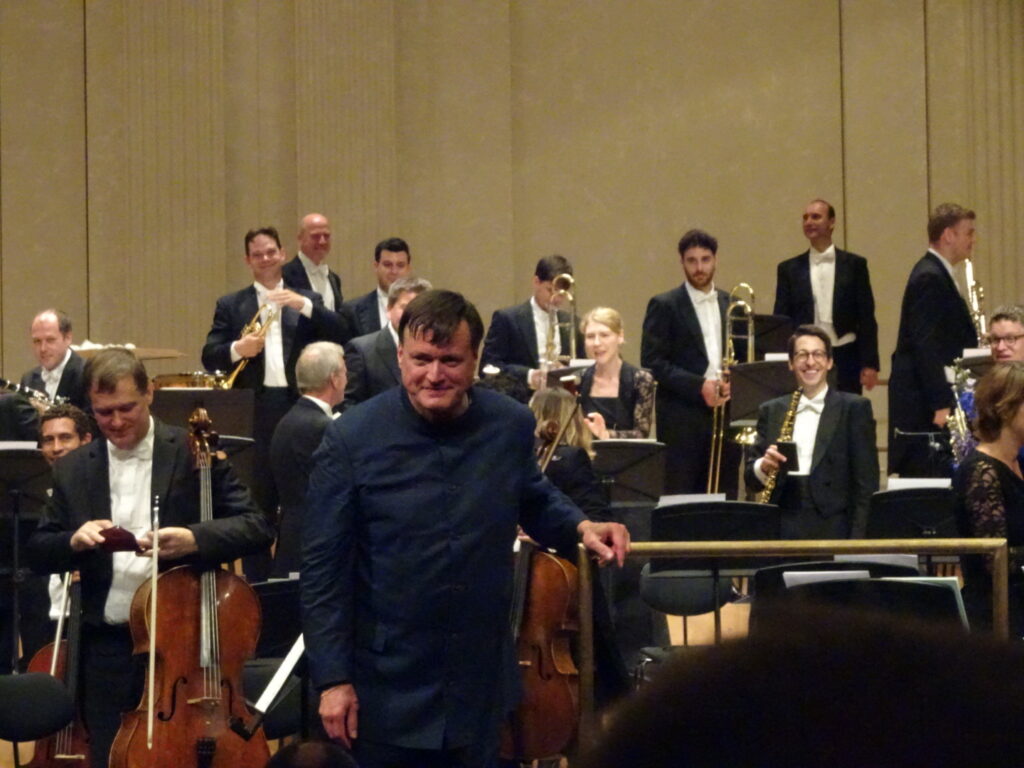
After two reschedules Blomstedt still couldn’t make this pair of concerts because of a fall over the weekend. Thielemann agreed to jump in the day before the first (this) concert and he only had the same day to work things out with the Staatskapelle. Never an enthusiastic Mozart interpreter, Thielemann scraped the 34th Symphony to Wagner’s Tristan Prelude and Liebestod.
Actually both orchestra and this substitute conductor knew the repertoire inside out. I heard Barenboim conduct the full opera in this same house and I’d heard Thielemann’s in Bayreuth. Let’s just say the two conductors have different philosophies, despite being classified as belonging to the same “German” school. Barenboim deliberately let his players go free but could easily hold them back. Thielemann demanded higher allegiance but he always gave ample space and time to the players to achieve his goals. Thielemann’s Tristan (just the Prelude and Liebestod) was intensive while Barenboim’s was intoxicated.
My previous live Bruckner before the pandemic turned out to be Thielemann’s as well. I heard him conduct the Vienna Philharmonic in the Eighth at the Konzerthaus. Before that I also heard his Fourth, Fifth, Ninth and Mass No.3 but I didn’t expect this veteran had further expanded his vision. He started the first movement is a flowing two beats, far from being rushed, this was absolutely the most gentle rendition of the opening, very much like a lullaby taking us to dream land. But as the music got more intense Thielemann’s tempi didn’t remain constant but evolved organically. What struck me the most was that he brought out a highly diversified gamut of moods out of almost the same music. Now I can’t say for sure that the Seventh is Bruckner’s softest symphony.
He likewise began the second movement with a plain and flowing approach. But the music grew from that, and Thielemann did the right thing when he refused to set the tone as funereal, something many conductors are inclined to do, as they perceived the whole movement to be a dirge for Wagner. Thielemann’s dirge came only after the climax, another example of his varied approach to Bruckner.
And the second movement climax was truly a miracle. The cymbal clash wasn’t the apex but just the starting gun to the real climax. Usually it isn’t hard to find this climax played loud, the trumpets can easily dominate the sound. But Thielemann did the opposite, the trumpets and the trombones were simply the pedal points, propelling the rest of the orchestra to soar upwards. If the climax of the Ninth Symphony adagio is the Apocalypse, I’m going to nickname Thielemann’s Seventh Symphony adagio climax as the Genesis.
To me this is a historic concert. Not because it was the best live Bruckner Seventh, the best Thielemann Bruckner, the best Thielemann concert, or the best live Bruckner… I’ve heard, but because this is an unrepeatable miracle. They did that good not “despite” one day of rehearsal, but because of it. Both parties knew the work so well, yet not everything could be worked out during such a short rehearsal so a sense of risk and real-time creation were achieved. “Despite” this success, I hope Berlin wouldn’t repeat Dresden’s mistake in appointing Thielemann as their next MD on top of his successful subbing of a Luisi concert of Bruckner Eighth.
All Photos: William Lau