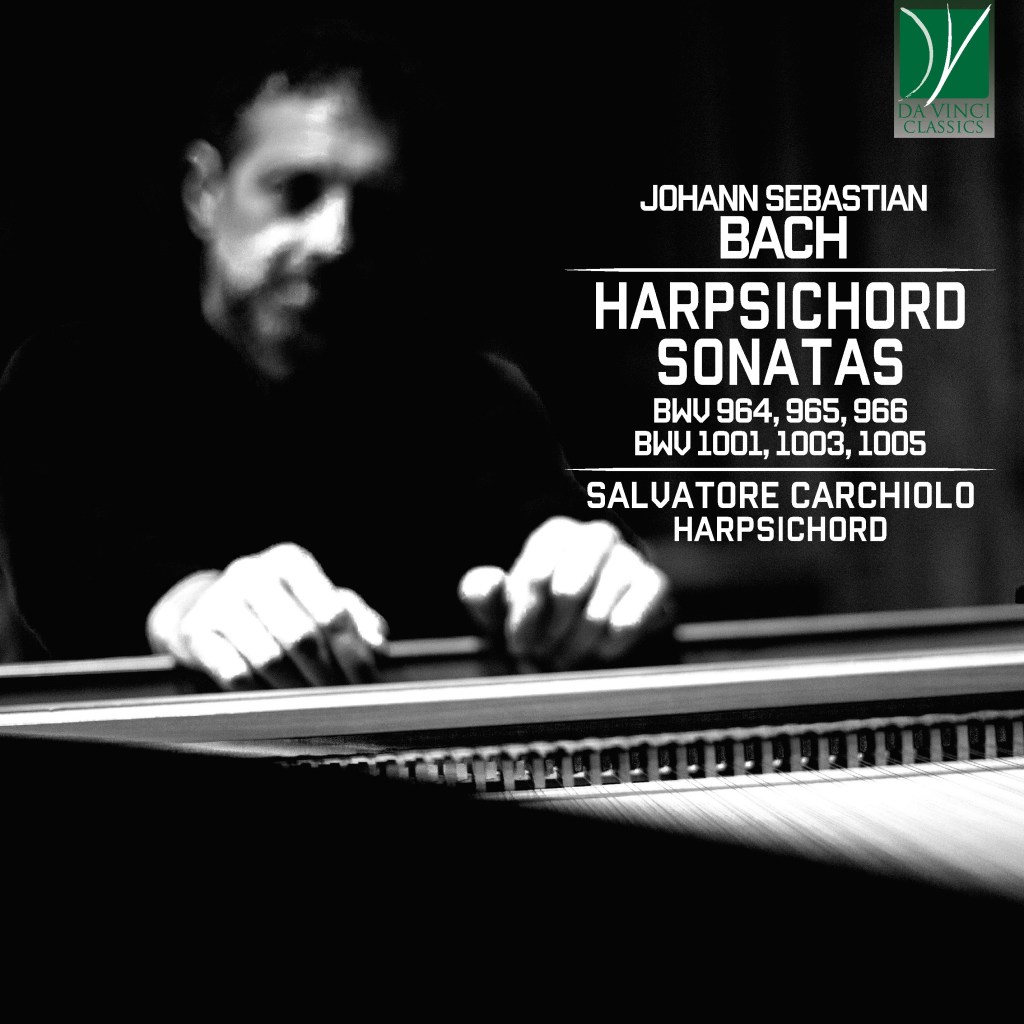
Bach: Solo Violin Sonatas Nos.1-3 arranged for harpsichord
Salvatore Carchiolo (harpsichord) (Da Vinci Classics)
(scroll down for English review)
巴哈三首無伴奏小提琴奏鳴曲中,現存有 《第二奏鳴曲》的古鍵琴改編,一般相信是由巴哈親自改編,但有人懷疑是另有其人。另外 《第三奏鳴曲》也有一個類似的改編,但只得第一樂章。古鍵琴家Carchiolo將其餘的都改編給古鍵琴,湊成一套。
要從小提琴改編成古鍵琴,少不免要有相當多的增寫,即使有《第二奏鳴曲》(軌9至12)作示範,也不是易事,尤其是賦格樂章。對小提琴最難的《第三奏鳴曲》賦格(軌2),Carchiolo的改編沒我想像般,能夠改寫成巴哈鍵盤賦格的那個模樣,反而是《第一奏鳴曲》那個賦格(軌6)較為靠譜。
較特別的反而是各個奏鳴曲的最後樂章(軌4、8、12),急速的音符和古鍵琴簡直是絕配,恍似巴哈本來就是為古鍵琴寫那般。古鍵琴技法之中,這麼密的音符是有擴大音量的效果,當時的作曲家當然知道。所以說古鍵琴全無音量起伏是錯的,但用鋼琴彈這種樂章卻很難彈出相同的大聲效果。
附加的BWV965及966奏鳴曲,是巴哈改編Reincken在1687年出版的Hortus Musicus的兩首組曲,Carchiolo只彈奏當中奏鳴曲的部分,省略了其他舞曲。我一時衝動以為,這些作品會否就是巴哈無伴奏小提琴奏鳴曲的原型?尤其是賦格最為相似。原曲編制是兩支小提琴、一支低音古提琴及通奏低音,但編制以外,其實是巴哈將別人的材料重塑至自己想要的模樣,所以Reincken的快板,也被巴哈改寫成賦格。
Of Bach’s three solo violin sonatas, there exists an arrangement for keyboard, believed (but with doubts) to be made by Bach, of the Second Sonata. The first movement of the Third Sonata was likewise transcribed. Harpsichordist Salvatore Carchiolo finished the job by arranging the whole of the First and Third Sonatas for harpsichord.
In transcribing an unaccompanied violin piece to the harpsichord the arranger has to fill in quite a lot, and it’s no easy feat even with the arrangement of the Second Sonata (tracks 9-12) as a sample. I don’t think Carchiolo was successful in rewriting the fiendishly difficult (to the violin) fugue of the Third Sonata (track 2) as an idiomatic keyboard fugue but that of the First Sonata (track 6) was more like it.
To me the finales (tracks 4, 8, 12) sounded wonderful when played on the harpsichord, as if the rapid figurations were conceived for the harpsichord. Such texture gives a sense of enhanced volume on the harpsichord and that was known to the composers of the Baroque era. So it was wrong to say there is no volume changes in the harpsichord but such effect would be hard to produce on a piano.
The BWV 965 and 966 sonatas are Bach’s arrangements of two partitas from Reincken’s Hortus Musicus, published in 1687. Carchiolo skipped the dances, though. These arrangements sounded too alike to Bach’s solo violin sonatas and I almost considered them the model of Bach. But after listening to the original works, which were written for two violins, a viola da gamba and basso continuo, I realized Bach simply shaped this material in his own likeness. For instance the allegros were rewritten as fugues.