
Jul 2, 2022 6pm Nationaltheater, Munich (Bavarian Opera)
Verdi: Otello
Cond: Antonino Fogliani, Dir: Amélie Niermeyer
Gregory Kunde (Otello), Rachel Willis-Sørensen (Desdemona), Simon Keenlyside (Iago), Oleksiy Palchykov (Cassio)
(scroll down for English review)
羅西尼及威爾第都有《奧塞羅》,哪齣厲害?當然是羅西尼,沒說錯,是羅西尼,雖然威爾第也是要聽的。來到慕尼黑看威爾第《奧塞羅》,擔綱的Gregory Kunde,就兩個奧塞羅都唱過。年紀較大的樂迷,會記得他是三十年前的羅西尼男高音,但幾年前我不時看到他的名字在歌劇院出現,他似乎過了60歲,事業進入第二春。本來也不信他行,直至在柏林看過他唱法國大歌劇、Meyerbeer《先知》才信服。兩年多疫情過去,想不到今年68歲的他還在唱,不過我不敢對這晚有太大期望。
我相信不少人的心水奧塞羅,還是昔日的杜鳴高,近年也崛起了不少新的奧塞羅,但Kunde和他們非常不同。唱過羅西尼那齣,確實不是偶然,Kunde將那方面的技術在威爾第運用得絕佳。大家知道奧塞羅這角色就是跟威爾第其他歌劇很不同,但都是往重炮那邊去想。Kunde一出場的Exultate!,並不是靠猛,而是靠準繩及穩定去維持高音。Kunde的奧塞羅,令我覺得威爾第是用男高音的高音,去表達角色的憤怒,亦即是說音樂已經把這份憤怒表露無遺,但是最受歡迎的重炮奧塞羅,傾向以憤怒來逼高音出來,以憤怒表達音樂,Kunde才是真正的用音樂去表達憤怒。杜鳴高68歲時都沒這麼好狀態,Kunde不只長青,更是唱得有智慧,其實就是長青的秘密。不過,就像今後樂迷會繼續覺得威爾第的《奧塞羅》好過羅西尼的《奧塞羅》,Kunde這種混和美聲技巧的唱法恐怕成為絕響。
其餘兩個主角都是換了人。Anja Harteros早在兩三星期前辭演,Rachel Willis-Sørensen頂上。雖然Harteros較有名,但已不復當年勇, Willis-Sørensen年輕得多,不過我覺得她還是大聲、要逼出來的地方才較像樣,雖然不俗,但仍未夠星味。Gerald Finley辭演Iago的消息,例是兩天前才收到電郵,替代的是另一位英國人,但比Finley在慕尼黑及維也納受歡迎的Simon Keenlyside。看過他的《馬克白》,覺得他有得過譽但明白他受歡迎的原因。這段疫情期間,我看真的幫到他把幾年前的傷病康復。雖然我還是覺得他太喜歡「演」,包括唱歌上及演戲上,但我已對他頗為滿意,尤其是伊亞果那首邪惡宣言。
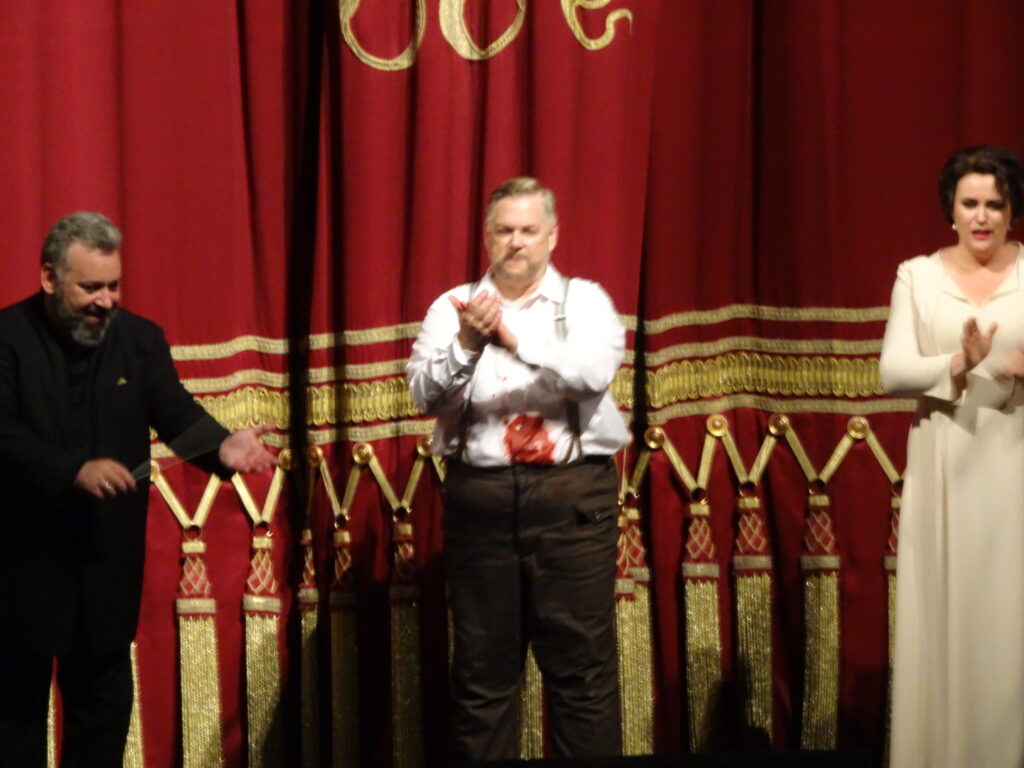
Gregory Kunde once shared a London run of Verdi’s Otello with Jonas Kaufmann. The Kaufmann shows were quickly sold out and the Kunde shows had plenty of seats left. A friend saw both and clearly preferred Kunde. I could easily understand that as I was amazed by his Meyerbeer’s Le Prophète in Berlin. Also, Kunde is probably the only living tenor who did both the Rossini and Verdi Otellos, as a big fan of Rossini’s over Verdi’s I must admit a weakness for Kunde.
Kunde is still going strong despite the time wasted due to the pandemic. I dared not expect much because he is already 68 but still he blew me away. No, it wasn’t the power, but the precise and tasteful singing. Instead of pushing top notes, he sang, then held them steadily. No matter who your favourite Otello is, be it Domingo, Del Monaco, or recently Antonenko or Soghomonyan, Kunde’s is entirely different. He made me realize Verdi already chose the high notes as the representation of Otello’s anger. Kunde got them right, and the anger was there without undue pressure. Instead, the prevailing taste is to use anger to express the music.
Rachel Willis-Sørensen replaced Anja Harteros as Desdemona, the German soprano gave her notice some two or three weeks ago. Although Willis-Sørensen was a worthy replacement, and might even good enough to be a first choice, I don’t think she has what it takes to be a diva. To put it more precisely, she sounded great only on top or big notes, elsewhere she was quite ordinary for me. Simon Keenlyside jumped in when Gerald Finley called in sick with less than a week’s notice. Keenlyside was frankly not my type of Verdi baritones (having seen his Macbeth in Vienna) but I admit the pandemic actually gave him the rest needed to heal up his damaged voice. I was quite pleased with his Iago’s credo, but he didn’t really need all those acting, be it on his voice or his face.